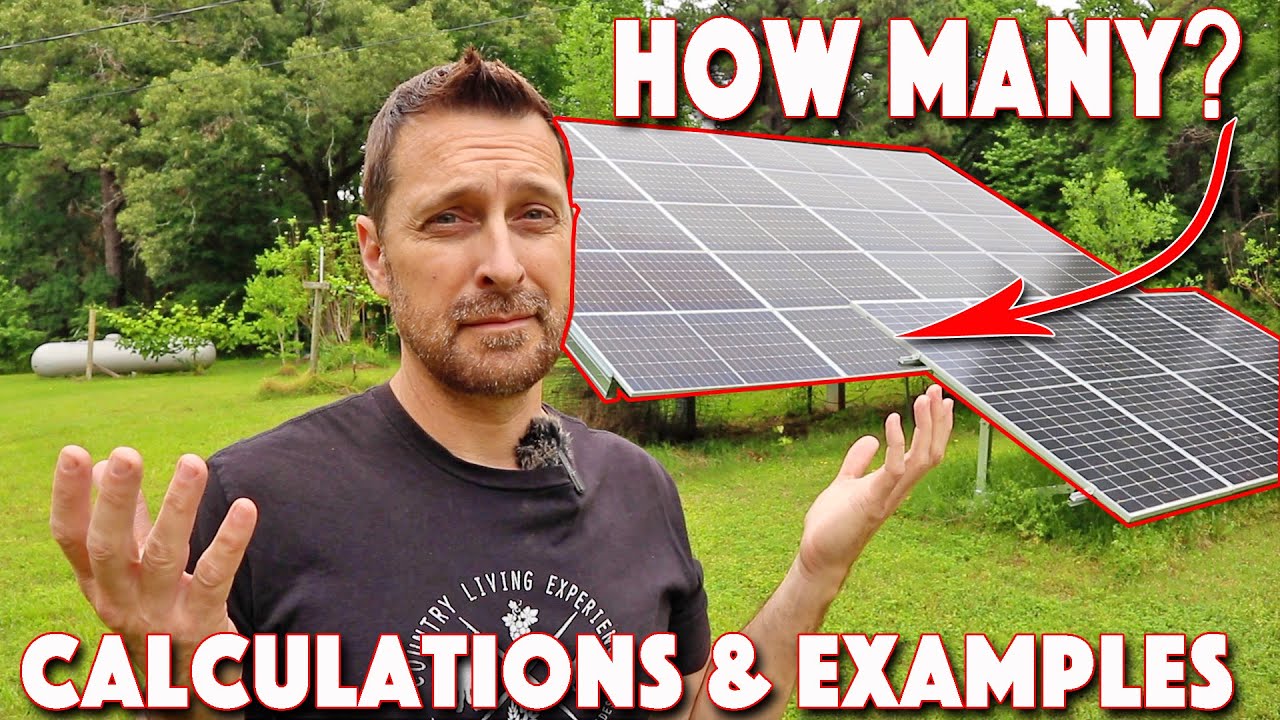
How to Size Your Off-Grid Solar System
Welcome to Off-Grid Tech Guide, your reliable source for navigating the world of independent power in the UK. Setting up an off-grid solar system is an empowering step towards energy independence, whether for your remote cabin, campervan, or garden office. However, getting the sizing right is absolutely crucial. Too small, and you’ll constantly be short on power; too large, and you’ve overspent unnecessarily. This comprehensive guide will walk you through the essential steps to accurately size your off-grid solar system for typical British conditions.
Step 1: Calculate Your Energy Needs (Load Assessment)
The first and most vital step is to identify every appliance you plan to power and calculate its daily energy consumption. This is known as a load assessment. Don’t skip this part; precision here prevents headaches later.
List all your intended appliances, find their wattage (usually on a label or in the manual), and estimate how many hours per day each will run. Multiply the wattage by the hours to get daily Watt-hours (Wh). For items like fridges, which cycle on and off, estimate their run time as a fraction of 24 hours (e.g., a fridge might run for 8 hours total over a day).
- Appliance: (e.g., LED Lights)
- Wattage (W): (e.g., 10W)
- Daily Usage (Hours): (e.g., 4 hours)
- Daily Watt-hours (Wh): (e.g., 10W * 4h = 40 Wh)
Sum up all the daily Watt-hours to get your total daily energy consumption. For example, a modest setup powering a laptop (60W for 3h = 180Wh), phone charger (10W for 2h = 20Wh), LED lights (10W for 4h = 40Wh), and a small portable fridge (50W for 8h equivalent = 400Wh) would total around 640 Wh per day. This crucial number will be the foundation for your entire system.
Step 2: Determine Your Battery Bank Size (Energy Storage)
Your battery bank is the heart of your off-grid system, storing the energy generated by your solar panels for use when the sun isn't shining. In the UK, with our often-overcast weather, it’s wise to factor in several days of autonomy – meaning how many days your batteries can power your loads without any solar input.
For a reliable system, aim for at least 2-3 days of autonomy. If your daily consumption is 640 Wh, and you want two days of autonomy, you'll need a battery capacity of 1280 Wh (640 Wh/day * 2 days). Lithium iron phosphate (LiFePO4) batteries are highly recommended for off-grid applications due to their long lifespan, efficiency, and ability to be discharged deeply without damage. Unlike traditional lead-acid batteries, LiFePO4 batteries offer nearly 100% usable capacity.
For a 1280 Wh requirement, a single Renogy 12V 100Ah LiFePO4 Battery (£212, 1280 Wh) or a LiTime 12V 100Ah LiFePO4 Battery (£169, 1280 Wh) would fit the bill perfectly. If you need more capacity for longer autonomy or heavier loads, consider models like the Renogy 12V 200Ah LiFePO4 Battery (£339, 2560 Wh) or the LiTime 12V 200Ah LiFePO4 Battery (£297, 2560 Wh). For simpler, all-in-one solutions, portable power stations like the EcoFlow DELTA 2 (£509, 1024 Wh) or Jackery Explorer 1000 v2 (£552, 1070 Wh) integrate batteries with an inverter and charge controller, offering a streamlined approach for smaller setups.
Step 3: Size Your Solar Panels (Energy Generation)
Once you know your daily energy consumption and desired battery capacity, you can determine how much solar panel wattage you need to replenish your batteries. The key factor here is 'Peak Sun Hours' (PSH) – the equivalent number of hours per day when solar irradiance averages 1,000 watts per square metre. In the UK, PSH varies significantly by season and location, ranging from 1-2 hours in deep winter to 4-5 hours in summer.
For a year-round reliable system, it’s best to design for the lower winter PSH, even if you only run it seasonally. Let's conservatively estimate an average of 2-3 PSH in the UK, especially if you're aiming for off-season use. You also need to account for system losses (e.g., temperature, shading, wiring) with an efficiency factor, typically 0.7-0.8.
Using our 640 Wh daily consumption example and assuming 2.5 PSH with a 75% efficiency factor: Solar Panel Watts Needed = Daily Wh / (PSH * Efficiency Factor) 640 Wh / (2.5 PSH * 0.75) = 640 Wh / 1.875 = approx. 341 Watts
This means you'd need around 340 Watts of solar panels. You could achieve this with two EcoFlow 160W Portable Solar Panels (£169 each) for 320W total, or by combining a Jackery SolarSaga 200W (£297) with a Jackery SolarSaga 100W (£152) for 300W. For a more permanent installation, a Renogy 400W 12V Monocrystalline Panel (£212) would provide ample generation, offering phenomenal power production even on cloudy days.
Step 4: Select Your Charge Controller and Inverter
These components manage the flow of electricity between your panels, batteries, and appliances.
- Charge Controller: This device regulates the voltage and current coming from your solar panels to your battery bank, preventing overcharging. Maximum Power Point Tracking (MPPT) charge controllers are highly recommended over Pulse Width Modulation (PWM) for off-grid systems, as they are significantly more efficient, especially in varying light conditions, and can extract up to 30% more power.
- Inverter: An inverter converts the DC (direct current) power from your batteries into AC (alternating current) power, which is what most household appliances use. Ensure your inverter's continuous wattage rating is higher than the maximum wattage of all the AC appliances you plan to run simultaneously. Also, check its surge rating, as some appliances (like fridges or power tools) require a brief burst of higher power to start up. For instance, the EcoFlow DELTA 2 boasts a robust 1800W output, suitable for many common appliances, while the larger EcoFlow DELTA 2 Max offers 2400W.
Many of the portable power stations mentioned earlier, such as the EcoFlow DELTA 2 Max (£849) or Jackery Explorer 1000 Plus (£849), come with integrated MPPT charge controllers and pure sine wave inverters. These all-in-one units simplify system design, offering powerful outputs and easy solar input, making them ideal for quick deployments and modular expansion.
Putting It All Together & UK Considerations
Sizing your off-grid solar system involves careful calculation and a degree of foresight. Always consider your worst-case scenario (e.g., consecutive cloudy winter days) when determining battery autonomy and panel wattage. It's often better to slightly oversize your solar array to ensure adequate charging, particularly in the UK.
Remember that flexibility is key. Modular systems, combining portable power stations with additional portable solar panels like the EcoFlow 220W Portable Solar Panel (£212) or Bluetti PV200 (£195), allow you to expand your capacity as your needs grow. If you're planning a large, permanent installation, consulting with a qualified solar installer can provide invaluable expertise and ensure your system complies with all relevant regulations. With careful planning, you can build a reliable and efficient off-grid power system perfectly tailored to your UK lifestyle.